Start with the property, not the operator
The best gate style is determined by the opening, the driveway, vehicle movement, grade, wind exposure, and available space. Choosing the motor first often creates compromises later. A good plan starts with how the gate will physically move and where every vehicle, pedestrian, and safety device will be located.
When a sliding gate makes sense
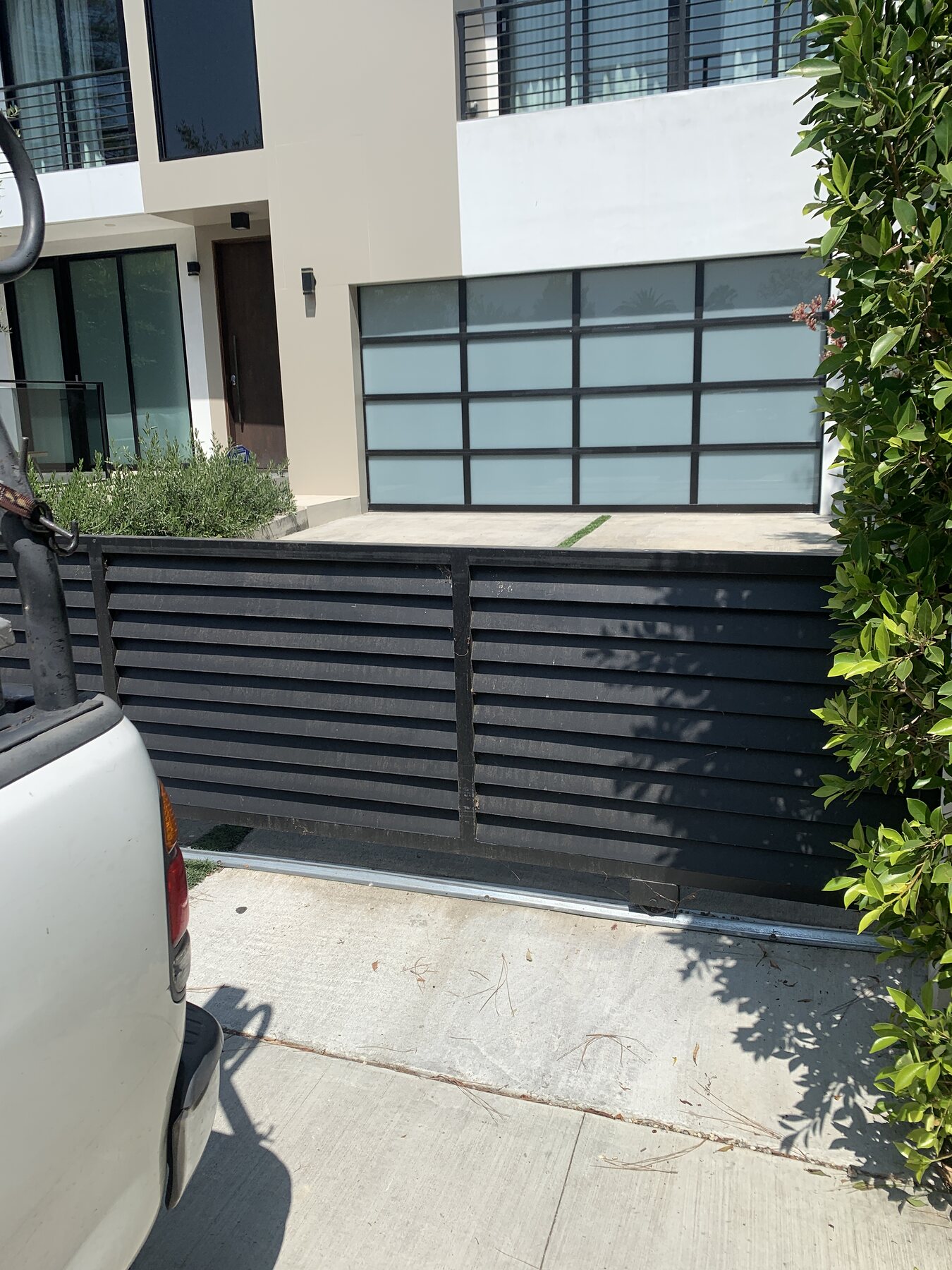
A sliding gate travels parallel to the fence line, which keeps the driveway clear of a swing arc. It is often a strong choice for sloped driveways, tight vehicle stacking, wide openings, and locations where the gate cannot safely swing toward a sidewalk or parked vehicle.
- Requires enough side room for the gate to open fully.
- Needs a straight, stable travel path with correctly placed rollers or track hardware.
- Debris, vegetation, and wheel or guide alignment must be considered during maintenance.
When a swing gate makes sense
A single or double swing gate can create a clean architectural entrance and may require less space along the fence line. It works best when the driveway provides a safe, level swing area and the gate leaves do not interfere with vehicles, pedestrians, landscaping, or public space.
- Grade changes through the swing path can limit movement.
- Long or solid gate leaves need careful attention to wind load and hinge structure.
- Two leaves require coordinated alignment, stops, operators, and safety planning.
Plan the complete access system
The gate is only one component. Power, conduit, operator placement, photo eyes, monitored safety devices, keypad or intercom location, vehicle detection, manual release access, drainage, and service clearance should be planned before fabrication and concrete work begin.
For a Los Angeles property, also consider how delivery drivers, guests, emergency access, pedestrians, and residents will use the entrance every day—not only how the gate looks when closed.
A simple decision checklist
A site visit allows the opening and available travel to be measured, the grade to be checked, and the real traffic pattern to be observed. Those details determine whether sliding, single swing, or double swing will provide the safest and most reliable result.
- Is there enough side room for a sliding gate?
- Is the swing area level and free of obstacles?
- Where will vehicles wait while the gate opens?
- How will pedestrians and guests enter?
- Where are power, drainage, and service access located?
Official guidance and manuals
Use the instructions for your specific equipment. These independent resources offer additional safety and product information.