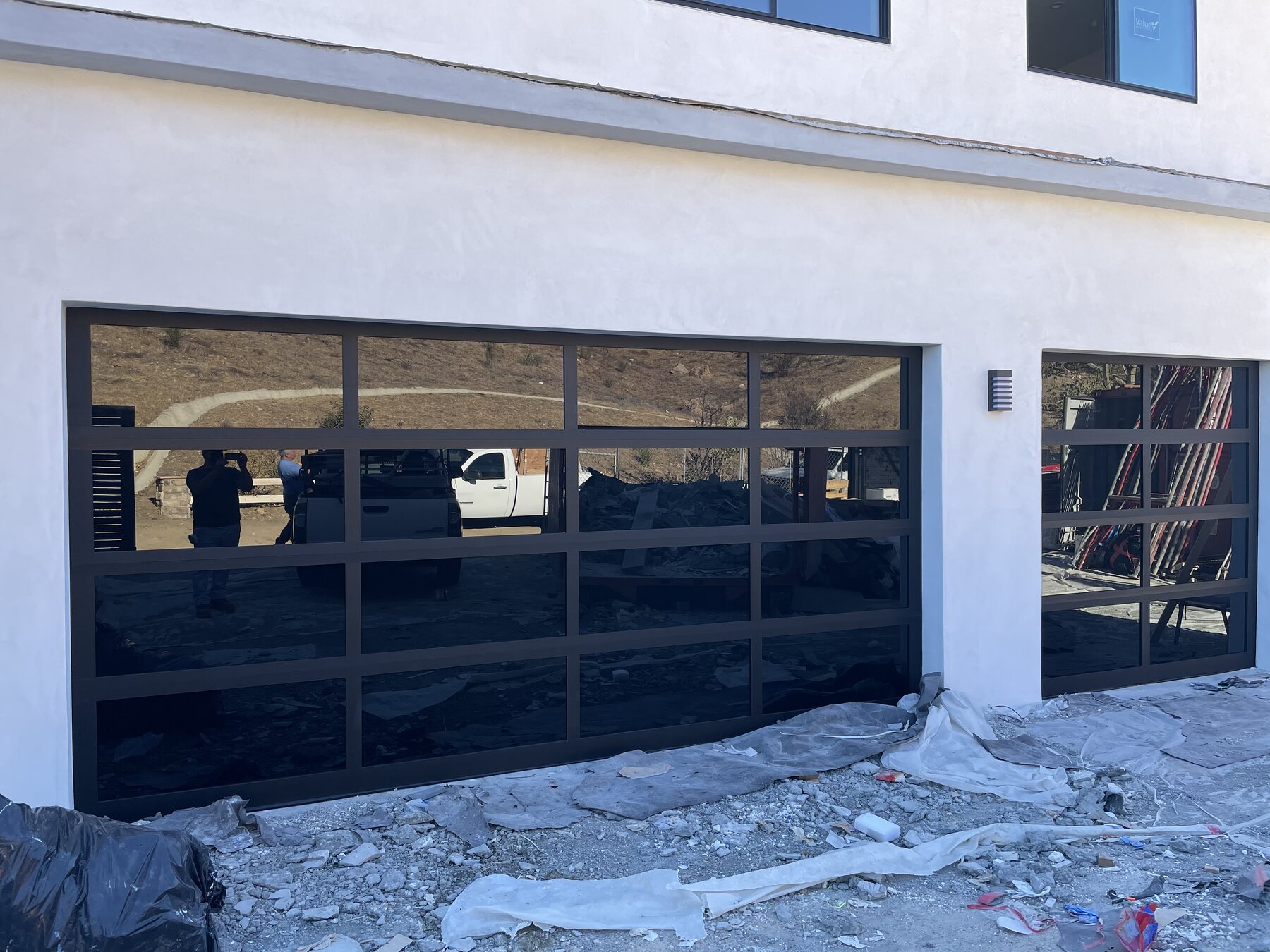
A garage door usually gives you a warning
Most garage-door failures do not begin with a door that suddenly stops moving. They begin with a new sound, uneven movement, extra vibration, or a door that no longer feels balanced. Catching those changes early can reduce damage to the panels, track, rollers, opener, and surrounding framing.
The following signs are based on the problems we commonly find while servicing residential and commercial doors throughout the San Fernando Valley and Los Angeles area.
1. The door moves unevenly or looks crooked
If one side rises before the other, a cable may be loose, frayed, or off the drum. A damaged roller or bent track can create a similar symptom. Stop operating the door if it binds, because repeated cycles can pull the door farther out of alignment.
2. You hear grinding, popping, or scraping
A healthy system should move smoothly. Grinding can point to worn rollers or bearings. Scraping may indicate track contact or a misaligned section. A sharp pop can come from spring or hardware stress. The sound matters, but the location and movement pattern help identify the actual cause.
3. The opener runs but the door does not move correctly
The opener is only one part of the system. A disconnected trolley, broken spring, damaged gear, incorrect travel setting, or binding door can make the motor run without moving the door normally. Continuing to press the remote can overload the opener.
4. The door feels unusually heavy
If the door feels unusually heavy during normal use, stop and arrange an inspection. Do not disconnect the opener on an open or unstable door to test its weight: the door could fall. Springs, cables and bottom brackets should be serviced by a trained technician.
5. The safety reverse does not work
Photo eyes should be aligned, secure, clean, and unobstructed. The door should also reverse when it encounters an obstruction during closing. Never bypass or tape over a safety device to keep the door operating.
6. Panels, hinges, tracks, or cables show visible damage
Cracked hinges, loose fasteners, separated panels, frayed cables, or a bent track are not cosmetic issues. Each can change how forces travel through the door. Photograph the damage, keep people and vehicles clear, and avoid another cycle if the door appears unstable.
7. The door has become slower or less consistent
Changes in speed can come from friction, balance, electrical supply, opener settings, worn hardware, or heat-related stress. Los Angeles dust and debris can also collect around tracks and moving components. A complete inspection is more useful than replacing a single part based only on the symptom.
- Do not stand or park beneath an unstable door.
- Do not loosen springs, cable drums, or bottom brackets.
- Call for service when movement, balance, or safety devices have changed.
Official guidance and manuals
Use the instructions for your specific equipment. These independent resources offer additional safety and product information.